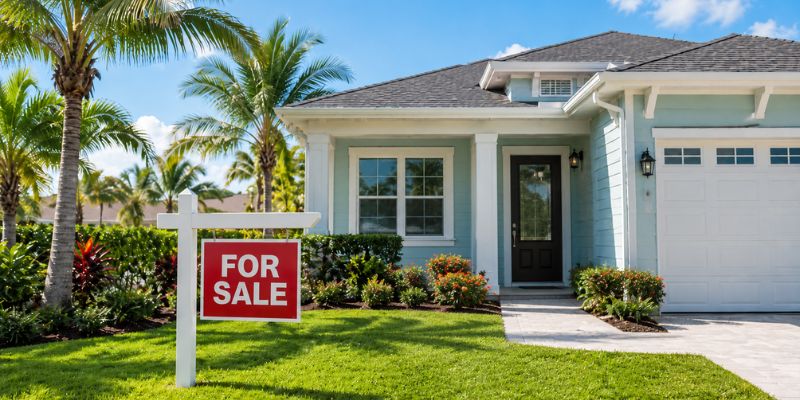
Florida voters approved Amendment 3 on November 3, 2026, bringing significant changes to the Florida homestead exemption and potential property tax savings for eligible homeowners.
Beginning in 2027, the homestead exemption for non-school property taxes increases to $150,000, followed by $250,000 in 2028.
But what does that mean for your actual property tax bill, and who qualifies?
What Is Florida Amendment 3?
Florida Amendment 3 is a constitutional amendment approved in November 2026 that increases the homestead exemption for non-school property taxes, changes assessment limits for certain non-homestead properties, and introduces new residency provisions.
The amendment takes effect January 1, 2027.
*Source: Florida Department of State, Official Amendment 3 Language
Florida Amendment 3 at a Glance
2027 homestead exemption
Increases to $150,000 for non-school property taxes
2028 homestead exemption
Increases to $250,000 for non-school property taxes
School property taxes
Not included in the expanded exemption
Non-homestead properties
Annual assessed-value increase cap drops from 10% to 5%
Residency requirement
December 31, 2026 is an important eligibility cutoff
Effective date
January 1, 2027
The exemption amounts refer to the portion of a home’s assessed value that may be excluded from certain property taxes, not the dollar amount homeowners will save.
How Much Could You Save on Property Taxes?
Your potential savings depend on your home’s assessed value, existing exemptions, and local property tax rates.
Fortunately, you don’t have to work through the calculations yourself.
This statewide calculator allows you to select your county and city, enter your home’s assessed value, and estimate how the new exemptions could affect your property taxes in 2027 and 2028.
Local Property Tax Savings Calculators
Some local property appraiser offices also offer calculators using property-specific tax information.
- Palm Beach County: Amendment 3 Property Tax Calculator. Search for your property by address, owner name, or parcel number to estimate potential savings. Designed for properties that currently receive a homestead exemption.
- Miami-Dade County: Property Tax Estimator. Includes estimated 2027 and 2028 property taxes under the expanded homestead exemption.
- City of DeLand (Volusia County): Amendment 3 Savings Calculator. Search for your property or enter its assessed value to estimate savings on the City of DeLand portion of your property tax bill.
Keep in mind: All calculators provide estimates based on available property records, historical or adopted millage rates, and eligibility assumptions. Your actual savings may vary as assessments, local tax rates, and implementation requirements change.
How Is Florida's Homestead Exemption Changing?
Florida’s homestead exemption reduces the taxable assessed value of a qualifying primary residence.
Under the previous rules, eligible homeowners generally received up to $50,000 in homestead exemptions for non-school property taxes, with inflation adjustments to part of the exemption.
Amendment 3 substantially increases that amount.
| Tax Year | Exemption for Non-School Property Taxes |
|---|---|
| 2026 | Existing exemption of approximately $50,000, with applicable inflation adjustments |
| 2027 | Up to $150,000 |
| 2028 | Up to $250,000 |
| 2029 and later | Increased exemption adjusted for inflation |
Does a $250,000 Homestead Exemption Mean $250,000 in Savings?
No. This is one of the most important distinctions to understand.
A homestead exemption reduces the assessed value of your property that is subject to certain taxes. It doesn’t provide a dollar-for-dollar reduction in your tax bill.
For example, if your property has an assessed value of $300,000 and qualifies for the full $250,000 exemption in 2028, its taxable value for applicable non-school property taxes could be reduced to $50,000 before considering other exemptions or adjustments.
Your actual savings depend on the tax rates applied to that taxable value.
School district property taxes still apply, and certain assessments and fees may also remain on your tax bill.
If you’re new to homestead exemptions, our Florida Homestead Exemption Guide explains how the benefit works, who qualifies, and how to apply.
Who Qualifies for Property Tax Savings?
The increased homestead exemption applies to qualifying homeowners who use their Florida property as their primary residence.
However, Amendment 3 includes an important residency provision.
Already a Florida Resident?
Homeowners who were permanent Florida residents by December 31, 2026, may qualify for the expanded exemption on an eligible homesteaded property.
You don’t necessarily need to buy a home before December 31, 2026.
The cutoff concerns Florida residency, not simply the date of purchase. You’ll still need to satisfy the applicable homestead exemption requirements.
Moving to Florida in 2027 or Later?
People who weren’t Florida residents on December 31, 2026, generally qualify initially for the existing homestead exemption when eligible.
The expanded exemption begins with their fifth year of receiving homestead exemption, to the extent permitted by the U.S. Constitution.
County property appraisers and implementing rules will provide additional guidance on how these provisions are administered.
What About Second Homes and Rental Properties?
Amendment 3 doesn’t extend the increased homestead exemption to second homes or investment properties, but it does include a change that may benefit those owners.
Beginning in 2027, the annual cap on assessed-value increases for certain non-homestead properties, including rental homes, second homes, and commercial properties, drops from 10% to 5%.
This limits how quickly a property’s assessed value can increase, but it doesn’t guarantee a lower property tax bill.
Will Your Monthly Mortgage Payment Go Down?
Possibly! If your property taxes are included in your monthly mortgage payment, lower taxes could mean a lower payment.
However, the change won’t be immediate. Your mortgage servicer will need to update your escrow account, typically during its annual review. Keep in mind that increases in homeowners insurance or other escrow expenses could offset some of those savings.
Buying a Home in Florida After Amendment 3?
If you’re planning to buy a home in Florida, Amendment 3 may affect your future property taxes, but don’t assume you’ll pay the same taxes as the current owner.
Florida properties are generally reassessed after a change in ownership. That means the seller’s assessed value, homestead exemption, and accumulated Save Our Homes benefits may differ significantly from yours.
When estimating your future housing costs, consider:
- Your property’s estimated assessed value after purchase.
- Whether and when you’ll qualify for homestead exemption.
- Your applicable local property tax rates.
- The potential effects of Amendment 3 in 2027 and 2028.
At Ideal Lending, we help homebuyers understand their complete monthly payment, including principal, interest, property taxes, and homeowners insurance, so they know what to expect before buying.
Have questions about what you could afford? Talk to an Ideal Lending Loan Officer and let’s run the numbers together.
Frequently Asked Questions
Did Florida Amendment 3 pass in 2026?
Yes. Florida voters approved Amendment 3 on November 3, 2026. The amendment increases the homestead exemption for non-school property taxes beginning in 2027.
When does Amendment 3 take effect?
Amendment 3 takes effect January 1, 2027. The exemption increases to $150,000 in 2027 and $250,000 in 2028, with inflation adjustments beginning in 2029.
Does Amendment 3 eliminate property taxes in Florida?
No. Amendment 3 expands the homestead exemption for non-school property taxes, but it does not eliminate school district property taxes or all other applicable assessments.
Do I have to apply for the new homestead exemption?
Homeowners must meet the normal homestead exemption requirements. If you already receive the exemption, check with your county property appraiser for instructions on the expanded benefit. New homeowners generally must apply for homestead exemption.
Does Amendment 3 replace Save Our Homes?
No. Florida’s existing Save Our Homes assessment limitation and portability provisions remain in place.